@keyframes fadeInUp{from{opacity:0;transform:translateY(20px)}to{opacity:1;transform:translateY(0)}}@keyframes pulseGlow{0%,100%{box-shadow:0 0 0 0 rgba(245,158,11,0.15)}50%{box-shadow:0 0 20px 5px rgba(245,158,11,0.08)}}@keyframes slideInLeft{from{opacity:0;transform:translateX(-20px)}to{opacity:1;transform:translateX(0)}}.stat-card{animation:fadeInUp 0.5s ease-out both;transition:transform 0.2s,box-shadow 0.2s}.stat-card:hover{transform:translateY(-2px);box-shadow:0 8px 25px rgba(0,0,0,0.1)}.pull-quote{animation:slideInLeft 0.6s ease-out both}.cta-box{animation:pulseGlow 3s ease-in-out infinite}.toc-link{transition:color 0.2s,padding-left 0.2s}.toc-link:hover{padding-left:4px}
Your US-based support agent costs $4,000+ a month. A trained Filipino CS agent — BPO-certified, CRM-fluent, neutral English — costs $500–$700. That gap is why thousands of US e-commerce and SaaS businesses have already built their remote customer support team in the Philippines. And it's why you're here.
**TL;DR**
- [The Philippines dominates CS outsourcing](#why-philippines) — near-native English, 1.3M+ BPO-trained workers, 70–80% cost savings.
- [Five steps from zero to live team](#five-steps): define scope → choose model → source and screen → onboard with SOPs → launch and iterate.
- [Full-time agents run $500–$800/mo](#costs-tools-legal); team leads add ~$200/mo more.
- [Philippines Data Privacy Act compliance is mandatory](#costs-tools-legal) when handling customer PII.
- [Best fit](#bottom-line): e-commerce, SaaS, fintech, and healthcare admin handling 50+ tickets/day.
## Why the Philippines Is the #1 Country for Remote Customer Support
Three things separate the Philippines from every other outsourcing destination: language, talent infrastructure, and cost. None of them are marginal advantages.
Wide-angle editorial shot of a sunlit open-plan BPO office in Bonifacio Global City, Manila — rows o
English proficiency here is different in kind, not just degree. The Philippines ranks in the top 20 in Asia on the EF English Proficiency Index — but the real edge isn't grammar. It's accent, idiom, and cultural fluency with American consumers. Filipinos grow up on US television, social platforms, and pop culture. They already understand the tone American customers bring to a support interaction. That familiarity shows up directly in CSAT scores.
The talent infrastructure exists at scale. The Philippine BPO industry employs over 1.3 million workers (IBPAP sector data) — most with formal customer service training and real CRM experience already on their résumés. You're not building from scratch. You're pulling from a deep, pre-qualified bench.
$500–$700
avg Filipino CS agent/mo
$3,500–$4,500
US equivalent/mo
70–80%
labor cost savings
For a full breakdown of what those savings look like per role and ticket volume, see our [Philippines CS cost and hiring guide](https://isuporta.com/blog/outsource-customer-support-philippines-2026-cost-hiring-guide-us-businesses).
## The 5-Step Process to Build Your Team
1
**Define your scope.** Before you post a single listing, map your channels (email, live chat, phone), required hours (PST business hours vs. 24/7), languages, and expected daily ticket volume. A team sized for 30 tickets/day looks nothing like one handling 300. Get this wrong and you'll hire for the wrong role twice.
2
**Choose your model.** Three real options: a [US-managed BPO](https://isuporta.com/us-managed-bpo) (fastest launch, compliance handled), a [dedicated team](https://isuporta.com/dedicated-teams) (your brand, your training, long-term retention), or direct hire (lowest cost, highest admin burden — you own payroll, taxes, and legal). Most businesses under 10 agents choose managed BPO for year one. Then reassess.
3
**Source and screen.** Post on OnlineJobs.ph or iSuporta's talent pipeline. Hard requirements: 45+ WPM typing, active CRM experience (Zendesk, Freshdesk, or equivalent), neutral accent on a recorded call test. Add a live Loom video response exercise — it simulates real async support work and reveals communication quality in under ten minutes.
4
**Onboard with SOPs.** Script every interaction type before day one: greeting templates, escalation triggers, refund decision trees. Set non-negotiable KPIs from the start — CSAT ≥90%, First Response Time <2 hours. Agents without documented expectations drift. Fast. For a full KPI and culture framework, see our guide on [managing an outsourced Philippines team](https://isuporta.com/blog/manage-outsourced-team-philippines-tools-kpis-culture-us-companies).
5
**Launch and iterate.** Pull CSAT scores, FRT data, and resolution rates at day 30. Calibrate scripts and escalation paths against what actually came in — not what you predicted. Teams that treat the first 30 days as a live QA sprint outperform teams that treat it as orientation. No exceptions.
**Key Takeaway:** Most US small businesses go live with a 2-agent remote customer support team in the Philippines within 3–4 weeks via a managed BPO. You don't need a large operation to start — you need defined scope and documented SOPs.
Filipino team lead in her late twenties on a video call with a US client, laptop open to a Zendesk t
## Costs, Tools, and Legal Basics for 2026
### What It Actually Costs
The math is clean. Full-time CS agents run $500–$800/month depending on experience and channel mix — phone support commands a small premium over email-only. Add a team lead at roughly $200/month more; worth every dollar once you hit four agents. Agency clients should expect a one-time recruitment fee, typically one month's salary per hire.
For a full role-by-role breakdown across every outsourced function, see our [Philippines outsourced salary guide](https://isuporta.com/blog/outsourced-philippines-salary-guide-2026-role-by-role-rates).
> "The tools your team runs on matter as much as who you hire. A great agent on broken tooling still produces average results."
### Tools That Work
| Tool | Purpose |
| **Zendesk / Freshdesk** | Ticket management, CSAT surveys, reporting |
| **Slack** | Real-time team communication and escalations |
| **Loom** | Async training, SOP walkthroughs, QA feedback |
| **Time Doctor** | Time tracking and productivity monitoring |
### The Legal Part You Cannot Skip
If your agents handle any customer PII — names, emails, order history, payment data — you're operating under the Philippines Data Privacy Act. Full stop. That means a data sharing agreement, documented data handling procedures, and a registered Data Protection Officer on the Philippine side. Our guide on [Philippines Data Privacy Act compliance for outsourcing](https://isuporta.com/blog/philippines-data-privacy-act-outsourcing-compliance) walks through exactly what US companies must do.
**Did You Know?** iSuporta handles DPA compliance and payroll entirely under its managed BPO model — zero employer-of-record burden on the US business. If the legal side feels like a wall, see how [employer-of-record arrangements in the Philippines](https://isuporta.com/blog/employer-of-record-philippines-us-small-business-2026) work before committing to direct hire.
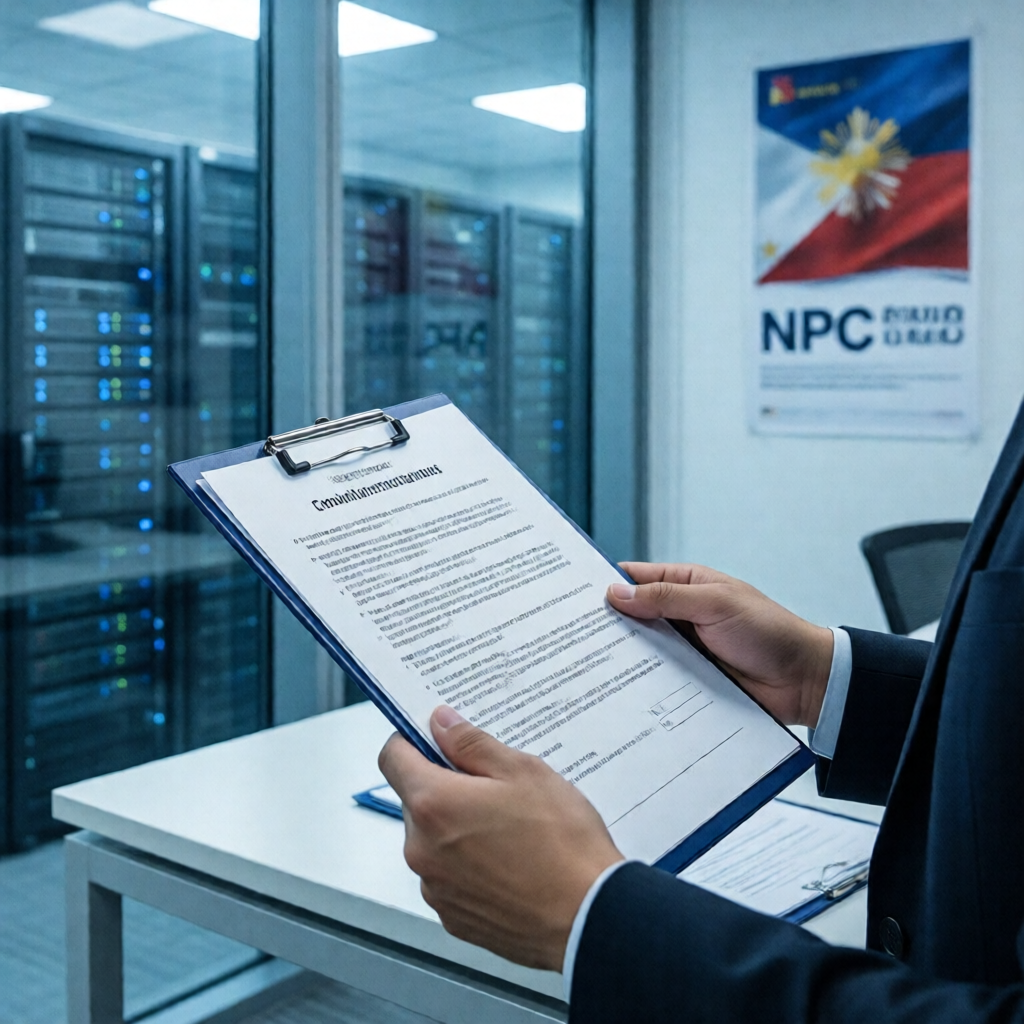Close-up editorial shot of a compliance officer's hands reviewing a data privacy agreement at a stan
## Bottom Line: Is Building a Philippines CS Team Right for You?
**The Bottom Line**
**Ideal for:** E-commerce stores, SaaS platforms, fintech apps, and healthcare admin teams handling 50+ tickets/day. You'll cut costs 70–80% without sacrificing quality — if you onboard properly.
**Not ideal for:** Hyper-technical Tier-3 engineering support or regulated industries legally requiring US-based agents (certain federal contractors, licensed financial advisors). Edge cases, not the norm.
Consider a SaaS founder in Austin paying $11,000/month for three in-house CS agents — a pattern we see constantly. Six weeks into a four-agent Philippines team, that cost drops to $3,200/month. FRT improves. CSAT climbs. Why? BPO-trained agents arrive with formal support methodology their previous hires never had.
Ready to pressure-test the model for your business? Start with our [customer support outsourcing checklist](https://isuporta.com/blog/outsourcing-customer-support-philippines-2026-us-checklist) before you hire anyone.
Build your Philippines CS team the right way — from day one.
iSuporta handles sourcing, compliance, payroll, and QA. You get a trained team without the admin overhead.
[Get a Free CS Team Quote from iSuporta](https://isuporta.com/services/customer-support)
## Frequently Asked Questions
### How long does it take to hire a remote customer support agent in the Philippines?
Through a managed BPO like iSuporta, most clients have their first agent live within 2–3 weeks. Direct hire via job boards runs 4–6 weeks once you factor in sourcing, screening, and onboarding. The timeline compresses fast once your SOPs are documented — that's almost always the bottleneck, not the candidate pool.
### Do Filipino customer support agents work US time zones?
Yes — and this is one of the defining features of the Philippines BPO industry. Night-shift and graveyard shifts aligned to US business hours are standard. Agents expect them. PST, CST, and EST coverage are all routine.
### What's the minimum team size to start outsourcing customer support to the Philippines?
Two agents is the practical minimum — one primary, one backup for PTO and volume spikes. Some businesses pilot with a single part-time agent, but coverage gaps appear fast. A 2-agent team with clear escalation paths to the US owner handles up to roughly 150 tickets/day without strain.
### What tools do Filipino CS agents typically use?
Most are fluent in Zendesk, Freshdesk, Gorgias, HubSpot, and Intercom from prior BPO experience. Live chat platforms (Tidio, Crisp, Intercom), Shopify order management, and basic CRM work are standard. Expect a short ramp on any proprietary internal tools — budget 3–5 days of guided training, not months.
### How do I pay a remote employee in the Philippines legally?
Via a BPO or EOR (Employer of Record), payroll and compliance are handled for you. Direct hire requires either a local Philippine entity or a contractor arrangement — contractors don't receive government benefits (SSS, PhilHealth, Pag-IBIG), which creates legal exposure. Most SMBs outsource through a managed partner to avoid this entirely.
Bottom Line
Hiring customer support in the Philippines in 2026 is one of the highest-ROI moves a US SMB can make — $8–14/hr for fluent, time-zone-flexible agents versus $22–30/hr domestically. The risk isn't the talent pool; it's poor onboarding and unclear SOPs. Document your processes, start with a 2-agent team through a managed BPO, and you'll have a scalable CS operation running within a month.
Blog7 min read
How to Build a Remote Customer Support Team in the Philippines: 2026 Step-by-Step Guide
Step-by-step guide to building a remote customer support team in the Philippines in 2026. Costs, hiring steps, tools, and what to expect from day one.
By iSuporta Team
remote customer support team philippinesPhilippinescustomer support
Ready to Build Your Team?
Get dedicated professionals from the Philippines — AI-trained, managed from our Cebu facility, from $1,200/mo.