Every conversation about Philippine BPO defaults to Manila. BGC towers, Ortigas campuses, Makati call centers. That reflex is costing AI and semiconductor companies real money — because the talent that actually wins in the Pax Silica era lives 580 kilometers south, in Cebu.
This isn't a contrarian take for its own sake. It's a structural argument, and the numbers back it up.
TL;DR
-
Cebu's BPO workforce (~500K) runs 15–20% lower attrition than Metro Manila
-
AI data labeling and RLHF is the fastest-growing BPO segment — 26% CAGR globally
-
Pax Silica sits in Luzon; Cebu is 80 minutes away and purpose-built for data ops
-
iSuporta's 80-person Cebu facility is already structured for this client profile
The Cebu BPO Ecosystem: Why It Outperforms Manila for Sticky AI Teams
Manila gets the headlines. Cebu gets the retention numbers.

Cebu Metro's BPO workforce now exceeds 500,000 — that's not a satellite market, that's a mature ecosystem. The University of San Carlos, USJ-R, the University of Cebu, and UP Cebu collectively produce tens of thousands of technically literate graduates every year. English proficiency scores consistently rank among the highest in the country. And critically, the cost of living in Cebu runs roughly 20–30% below Metro Manila, which means senior operators aren't job-hopping to cover rent.
15–20% Lower attrition in Cebu vs. Metro Manila equivalents, per IBPAP regional data
500K+ BPO workers in Cebu Metro, per IBPAP 2025 industry mapping
Attrition is the silent killer of AI training data projects. You can't run meaningful RLHF campaigns with teams that turn over every nine months. Institutional knowledge — how to handle edge cases, how to evaluate nuanced reasoning outputs, how to maintain inter-annotator agreement at scale — takes time to build. Cebu gives you teams that stick. That's not a soft benefit. It's a hard operational advantage.
iSuporta has operated from Cebu for years specifically because of this dynamic. Every client who's tried to run annotation work out of Manila and then moved to a Cebu-based team reports the same thing: the second team is still there two years later.
AI Training Data Is the Fastest-Growing BPO Segment — and PH Talent Is Ready
The global AI training data market is growing at roughly 26% CAGR. That's not a rounding error — that's a structural shift in what "outsourcing" means for the next decade.

The Philippines already has an estimated 200,000 workers in data labeling, annotation, and adjacent AI pipeline roles. Inter-Annotator Agreement (IAA) rates above 90% are achievable with properly trained Cebu teams — that's the industry benchmark for production-grade AI training data. The difference between 88% and 92% IAA isn't a footnote; it directly affects model quality downstream.
Did You Know? RLHF — Reinforcement Learning from Human Feedback — is the process that fine-tunes AI models like GPT and Claude using human preference data. Human evaluators compare model outputs and rank them; that signal teaches the model to behave better. It requires strong English comprehension, logical reasoning, and often technical literacy. It's the highest-value annotation work on the market right now — and it can't be automated away.
Pricing anchors matter here. All-in cost for a senior AI annotator in Cebu runs $3,000–$6,000/month, depending on specialization. RLHF roles requiring code evaluation — Python review, SQL logic scoring, reasoning chain assessment — command a 25–40% premium over standard labeling work. Compare that to $15,000–$25,000+ for equivalent US-based hires. You're not choosing between quality and cost. You're choosing between cost-efficient quality and expensive quality.
According to Analytics Insight industry data, AI data operations have overtaken traditional voice BPO as the highest-growth offshore category for the second consecutive year. The companies moving fastest already have Cebu teams in place — not ones waiting on Manila availability.
Hub-and-Spoke: Pax Silica in Luzon, AI Ops in Cebu — 80 Minutes Apart
A lot of people conflate "Philippines" with "Manila" and assume that anything happening in Luzon means their support operations need to be there too. That's not how the model works.
"You don't need your data labeling team in the same city as your fab line — you need them in the city with the best talent retention and the lowest cost floor."
Pax Silica, the proposed semiconductor and advanced manufacturing zone anchored in New Clark City (Tarlac, Central Luzon), is a BCDA and SEIPI-coordinated initiative designed to attract foreign AI chip, semiconductor, and hardware logistics firms into the Philippines. It's a Luzon play — infrastructure-heavy, hardware-focused, and built around physical coordination. That's not what Cebu is for, and that's exactly the point.
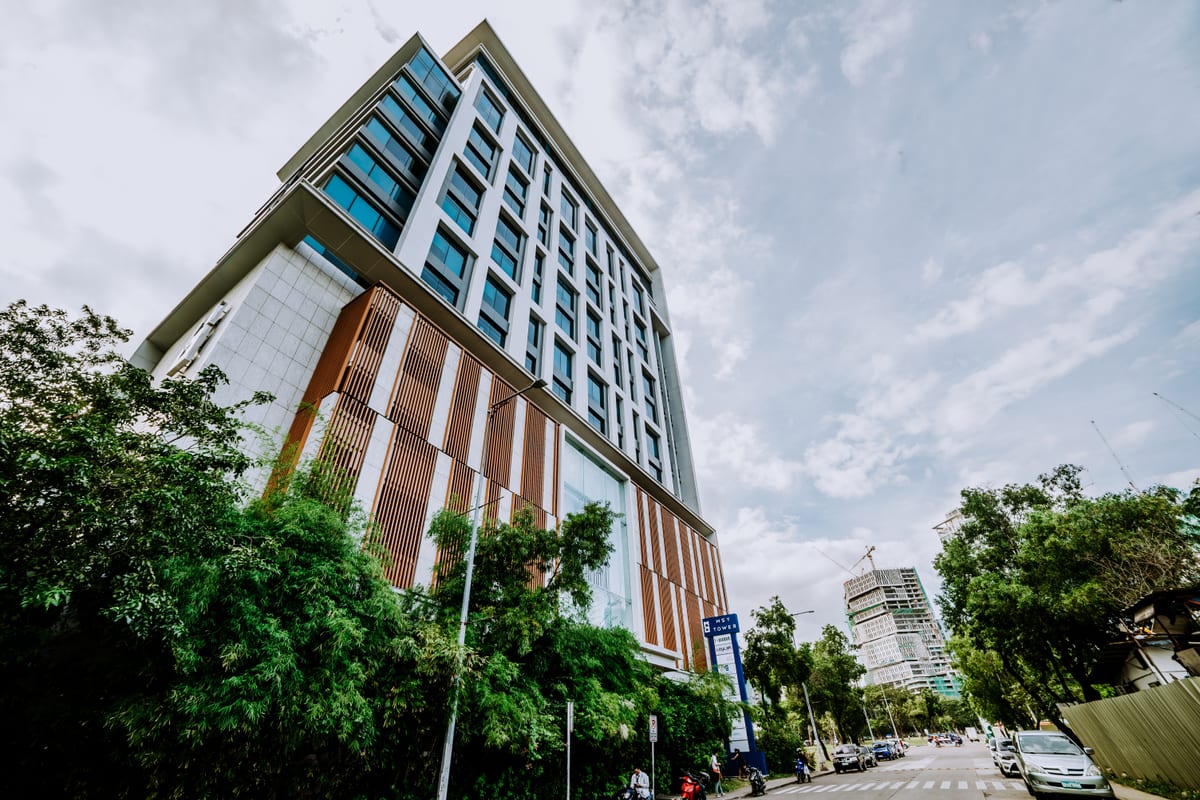
The hub-and-spoke BPO model is well-proven. Manufacturing and hardware coordination sit in one city; data pipelines, AI ops, and back-office functions sit in another. Cebu to Clark Airport is roughly 80 minutes by air. Quarterly leadership alignment visits are easy. Day-to-day AI data operations run from Cebu, asynchronously with the Luzon hardware layer, just like every distributed enterprise operation already does.
iSuporta's Cebu facility — 80 employees, US-managed, with an AI-enabled operations pillar already in production — is built for exactly this profile. Clients building AI data infrastructure around Pax Silica don't need a new vendor relationship. They need the vendor that's already in the right city with the right workforce.
What Pax Silica Clients Should Do Right Now
The wave of AI and semiconductor companies targeting the Philippines via Pax Silica will create immediate demand for data operations support — model evaluation, RLHF pipelines, annotation at scale, technical back-office. That demand doesn't require a Manila solution. It requires a Cebu solution.
iSuporta is the only US-managed Cebu BPO already positioned for AI-enabled operations at this scale. If you're scoping data ops support for an AI infrastructure build in the Philippines, have that conversation before you've signed a Manila contract you'll spend 18 months unwinding.
The Bottom Line Pax Silica brings a wave of AI and semiconductor companies to the Philippines who need data operations support — and Cebu, not Manila, is the talent answer. iSuporta's existing 80-person Cebu facility, US management layer, and AI-enabled operations model means the infrastructure is already built for exactly this client profile.
Ready to build your AI data team in Cebu?
iSuporta is the only US-managed Cebu BPO already structured for RLHF, annotation, and AI ops at scale.
Talk to iSuporta About Your AI Data Team →
Related iSuporta resources
- Build an AI operations pod with data labeling support.
- Compare the broader AI-enabled operations model.
- See a production example in the RLHF outsourcing case study.
- Map the operating requirements in Pax Silica partner services.
Frequently Asked Questions
Why is Cebu better than Manila for AI data labeling and RLHF work?
Cebu offers 15–20% lower attrition, a lower cost of living that keeps senior annotators on teams longer, and a deep university pipeline — USC, USJ-R, UC, and UP Cebu — producing technically literate graduates who are less contested by competing BPOs. Most AI data vendors default to Manila because that's where the brand recognition is. Cebu talent is less saturated and significantly more stable for long-horizon AI training data projects where institutional knowledge compounds over time.
What does it cost to outsource RLHF or AI annotation work in the Philippines?
All-in cost for a senior AI annotator in Cebu runs $3,000–$6,000/month depending on technical specialization and project complexity. RLHF roles requiring code evaluation — Python review, reasoning chain scoring, SQL logic assessment — command a 25–40% premium over standard image or text labeling. Equivalent US-based senior annotators typically run $15,000–$25,000+ in loaded annual cost; the Cebu arbitrage is real without any quality trade-off.
Can a Cebu-based team realistically support clients operating in the Pax Silica / New Clark City zone?
Yes, and the operational model is straightforward. Cebu to Clark Airport is roughly 80 minutes by air, making quarterly in-person visits easy. AI data operations — annotation, RLHF, model evaluation — don't require physical co-location with hardware or manufacturing lines. The hub-and-spoke model (Pax Silica for production coordination, Cebu for AI data and back-office ops) is cost-efficient and mirrors how every serious distributed enterprise already runs its offshore operations.