A US startup founder was burning $140/hr on a senior React developer in Austin and still couldn't keep pace with the sprint backlog. Six weeks after moving two mid-level roles to a Manila-based team, engineering velocity doubled and monthly burn dropped $18,000. That's not a pitch — it's the math that keeps playing out when you outsource software development to the Philippines in 2026.
TL;DR
-
Philippine dev rates run $15–35/hr — roughly 65–75% less than US equivalents.
-
English fluency and US cultural alignment give the Philippines an edge for collaborative, client-facing work.
-
Proper vetting takes 4–6 weeks. Trial projects are non-negotiable.
-
Expect a 2–4 week ramp-up; by day 90, sprint velocity is measurably higher.
-
React, Node.js, Laravel, and Flutter are where Filipino talent runs deepest.
Why US Tech Companies Are Choosing the Philippines Over India
India has dominated offshore dev conversations for two decades. For US startups that prioritize communication over raw headcount, the Philippines keeps winning that comparison — and the reasons are structural, not incidental.
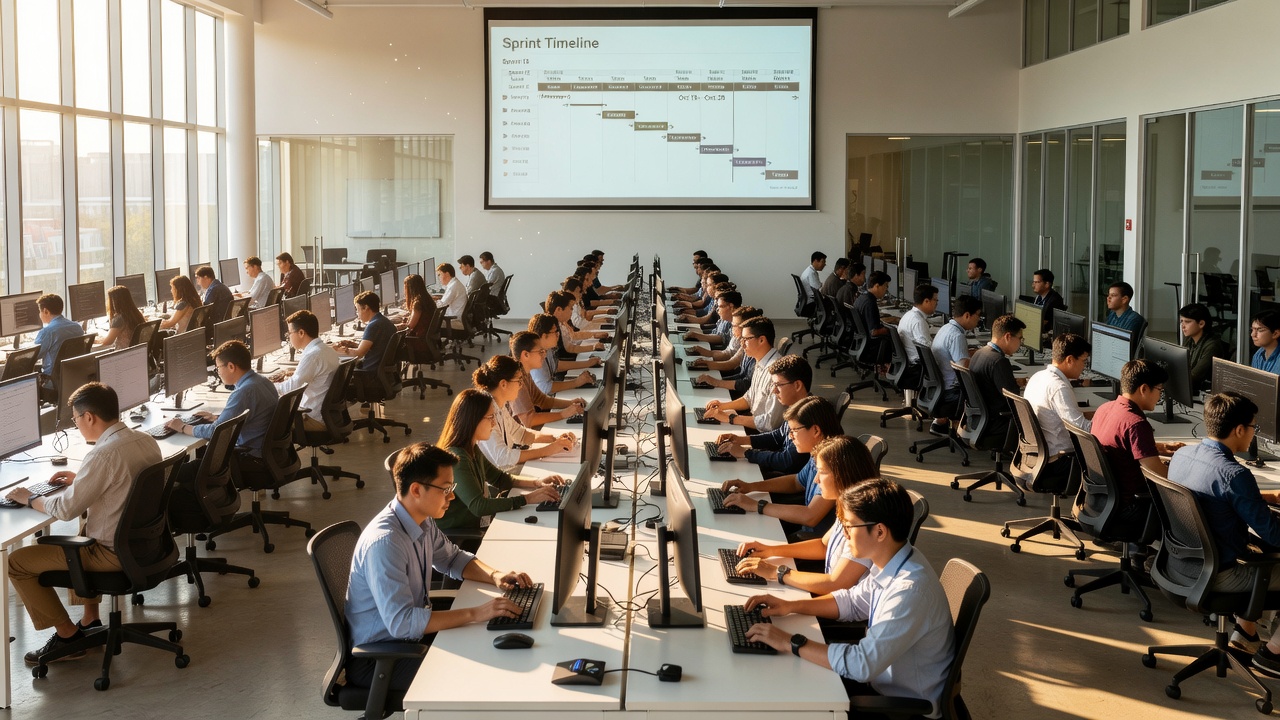 Wide editorial shot of a sunlit Manila BPO floor — rows of Filipino developers at dual-monitor works
English is an official language. The US-modeled curriculum means most CS grads from Manila and Cebu have spent their academic careers writing code documentation and defending technical work in English. That shows up immediately in async collaboration — fewer back-and-forths, cleaner tickets, less time re-explaining specs before anyone writes a line of code.
🇵🇭 Philippines
-
English: Official language, near-native
-
Hourly rate: $15–35/hr
-
Time zone (UTC+8): Partial US overlap; async-friendly
-
Attrition: Lower in dedicated team models
-
Cultural fit: US-aligned education + media
-
Mindset: Client-service oriented
🇮🇳 India
-
English: Strong but accent/dialect varies widely
-
Hourly rate: $12–40/hr (broader range)
-
Time zone (UTC+5:30): More difficult US overlap
-
Attrition: Higher in large commodity dev shops
-
Cultural fit: Strong engineering culture, less US-aligned UX mindset
-
Mindset: Larger talent pool, more specialization depth
For a deeper breakdown, see our Philippines vs. India outsourcing comparison for US small businesses. Short version: India wins on niche ML research and large enterprise systems teams. The Philippines wins on tight collaboration and workable communication. For US SMBs, that second set of priorities tends to matter more.
2026 Hourly Rates and Tech Stack Fit
$15–35 per hour for PH devs in 2026
65–75% cost reduction vs. US equivalents
$80–150 typical US dev hourly rate
Junior developers (1–2 years) run $15–20/hr. Mid-level is $20–28/hr. Seniors who can architect, lead, and own delivery come in at $28–35/hr. A US mid-level full-stack dev costs $90–120/hr. The math doesn't require a spreadsheet.
 Tight editorial frame on a Filipino developer's hands hovering over a mechanical keyboard, dual moni
Where Filipino developers are genuinely strong: React, Node.js, Laravel/PHP, Python, Flutter, React Native, and QA automation. The Laravel pool is especially deep — over a decade of web product work on that stack. Flutter has surged since 2023. The coverage for most US product companies is more than sufficient.
The honest gaps: deep ML research talent, Rust systems programming, and bleeding-edge LLM infrastructure work runs thinner here than in India or Eastern Europe. If your core product is an AI infrastructure layer, look elsewhere for the lead architect. The surrounding product engineering? The Philippines delivers.
Dedicated team models — not hourly freelancers — are the right structure for ongoing product development. iSuporta's dedicated teams model bundles management overhead into a predictable monthly cost, so you're not chasing invoices or absorbing rate volatility.
For how staffing augmentation differs from project-based outsourcing, this Philippines staff augmentation guide for US tech companies breaks down when each model fits best.
How to Vet Developers Without Getting Burned
1 Define scope and stack before you talk to anyone. Vague requirements attract candidates who'll tell you whatever you want to hear. Write down the stack, seniority level, expected deliverables, and whether you need a lead or an executor.
2 Choose your sourcing channel deliberately. BPO partners pre-screen candidates and manage HR/legal compliance — slower to start, more stable long-term. Freelance marketplaces are faster but you own all the vetting. For dedicated roles, BPOs almost always win.
3 Run a real technical screen. GitHub portfolio review, a live 45-minute coding test (not take-home — too easy to game), and an architecture Q&A. Ask them to walk through a system they built. If they can't explain past architectural decisions, they didn't make them.
4 Run a paid trial project — 2 to 4 weeks. Real, scoped work. Not a toy problem. This surfaces communication habits, async discipline, code quality, and whether they ask the right questions when requirements are ambiguous.
5 Lock down the contract before Day 1. Four non-negotiables: IP assignment clause, NDA, milestone-based payment schedule, and data security provisions. See what to include in a Philippines outsourcing contract for a clause-by-clause breakdown and red-flag template.
💡 IP Warning Philippine IP law under RA 8293 can leave ownership ambiguous in some contractor arrangements. Without an explicit work-for-hire clause, don't assume the code is yours. Get it in writing before a single line is written.
Red flags that should stop the process cold: no GitHub history or visibility into real work; inability to explain past architectural decisions; resistance to video calls; vague answers about who actually wrote the code. That last one appears most often with agency listings that are really individual resellers wearing a company name.
See exactly how iSuporta vets and onboards your team for a concrete look at how a structured process eliminates these risks.
What to Realistically Expect in the First 90 Days
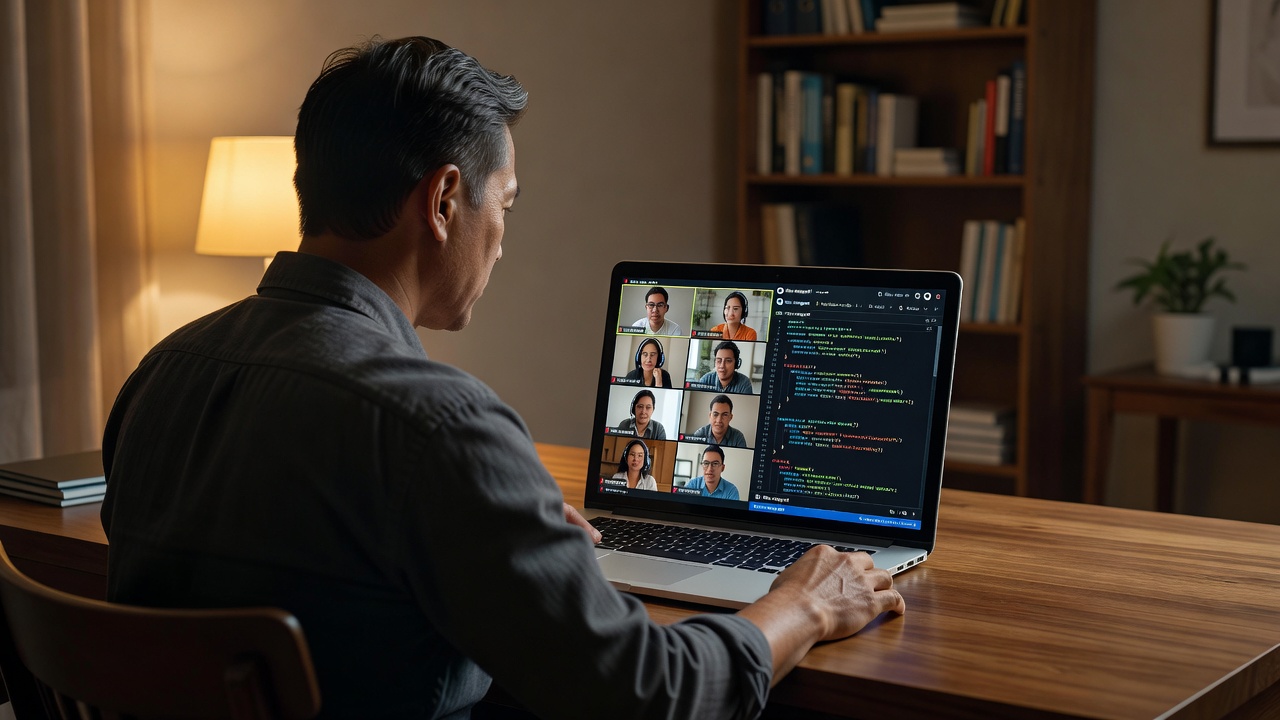 Over-the-shoulder editorial shot of a US founder at a home office desk, laptop screen split between
Weeks 1–2 are ramp-up. Budget for it. Documented specs, onboarding materials, and a clear escalation path matter more at this stage than anywhere else. An offshore team handed vague requirements will build to their best guess — and you won't like what comes back.
One SaaS founder hired two mid-level Filipino developers through a dedicated model without assigning a US-side technical lead. By week three, both were blocked on architectural decisions. Three weeks of paid time, minimal output. Plugging in his lead engineer as the daily point of contact fixed it immediately. The lesson is simple: offshore teams are multipliers, not replacements for technical leadership.
By day 90, expect faster sprint velocity, lower monthly burn, and your US engineers freed for higher-value product and strategy work. Schedule daily standups at 8–9am Manila time — that lands as evening US hours, the maximum workable overlap. Detailed tickets, Loom walkthroughs, and architecture decision records reduce confusion faster than any other investment you'll make.
⚡ Bottom Line Outsourcing software development to the Philippines works when you have clear specs, a US-side technical lead, and a structured vetting process. Rates at $15–35/hr deliver real savings without the quality trade-offs that plagued earlier offshore models. The biggest failure mode isn't talent — it's unclear requirements and no internal owner.
Frequently Asked Questions
How much does it cost to outsource software development to the Philippines in 2026?
Expect $15–35/hr depending on seniority — a 65–75% reduction versus US equivalents. Dedicated team models through a BPO bundle management overhead, cutting hidden costs and eliminating rate volatility.
Is the Philippines better than India for software outsourcing?
Depends on priorities. The Philippines offers stronger English fluency, US cultural alignment, and a client-service mindset — decisive advantages for startups that need tight collaboration. India wins on niche ML research and enterprise-scale teams. For most US SMBs, the Philippines edges it.
What tech stacks are Philippine developers strongest in?
Deepest talent in React, Node.js, Laravel/PHP, Python, Flutter, and QA automation. Thinner on ML research and systems-level languages like Rust or C++. For most US product companies, that coverage is more than enough.
How do I handle IP protection when outsourcing to the Philippines?
Include an explicit IP assignment clause — never assume defaults cover you. Add an NDA and data security provisions before Day 1. Our Philippines outsourcing contract guide has a full clause-by-clause breakdown.
Should I use a BPO or hire freelancers directly?
For ongoing dedicated development work, a BPO is almost always the stronger choice — pre-screened candidates, managed compliance, stable team continuity. Freelance platforms are faster to start but put all vetting and HR overhead on you. The more critical the role, the more that management layer is worth paying for.
The Philippines is not a magic cost button. Done right — proper vetting, clear specs, structured engagement — it's one of the most effective ways to scale a US tech team in 2026. Done wrong, it's just cheaper confusion.
Ready to build your Philippines dev team? iSuporta handles sourcing, vetting, and onboarding — so you skip the 6-week trial-and-error phase.