Your ML team just approved a 500,000-sample RLHF dataset. The annotation budget is $180K. A US firm quotes $38/hr. Eastern Europe comes in at $18. Then someone flags the Philippines — $6–$8/hr, English-first workforce, BPO infrastructure already at scale. That gap is exactly why AI teams are routing annotation work to Manila and Cebu. If you want to outsource data labeling to the Philippines, here's what the numbers actually look like — and how to move.
TL;DR
-
Philippine data labeling teams cost $5–$9/hr — 40–60% cheaper than India or Eastern Europe
-
English-first workforce outperforms on NLP, RLHF, and instruction-following tasks specifically
-
The Philippines BPO sector employs 1.3M+ workers — annotation capacity scales fast
-
Three steps to launch: define schema → choose engagement model → request a quote
Data Labeling Costs: Philippines vs India vs Eastern Europe
The cost gap is real. It compounds brutally fast at volume. Here's how the three main offshore regions stack up on the metrics that actually matter for AI annotation work.
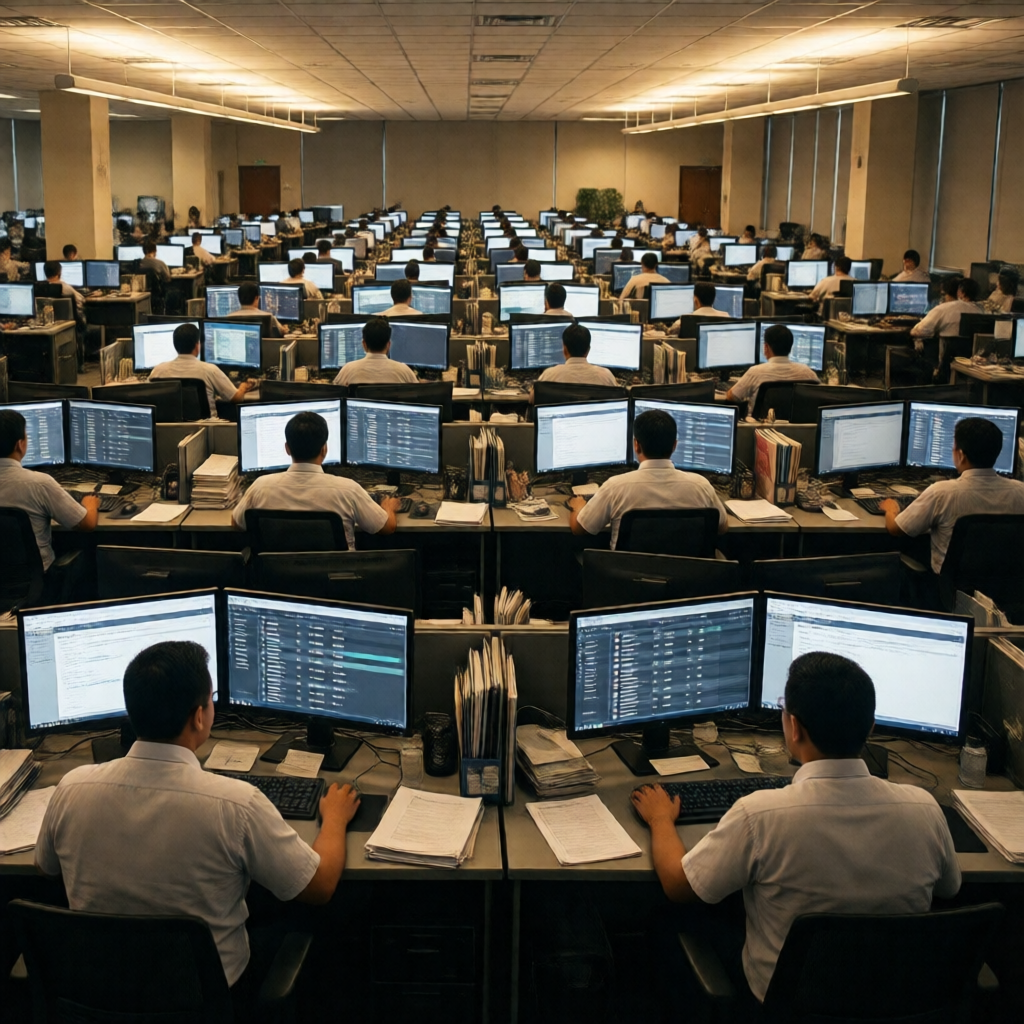 Wide editorial shot of a Manila BPO annotation floor during peak shift — rows of Filipino specialist
| Metric | 🇵🇭 Philippines | 🇮🇳 India | 🇵🇱 Eastern Europe |
| Hourly rate range | $5–$9/hr | $6–$12/hr | $12–$22/hr |
| English proficiency | Very High (EF EPI top tier; English is an official language) | High, but variable by region | High (second-language fluency) |
| NLP / RLHF accuracy | Strong — native-level instruction comprehension | Moderate — stronger on image/CV tasks | Strong — best for complex multi-label annotation |
| US timezone overlap | Night-shift coverage standard; 4–6hr overlap | Limited — 1–2hr overlap (ET) | None with US business hours |
| Typical ramp time | 1–2 weeks (existing BPO infrastructure) | 1–3 weeks | 3–6 weeks |
Model it out: ten annotators at 160 hours/month costs $8,000–$14,400 in the Philippines versus $19,200–$35,200 in Eastern Europe. That's $130K–$250K annually before you factor in management overhead. For a deeper rate breakdown, see the outsourcing cost Philippines per hour guide and the full Philippines vs India outsourcing comparison.
India has genuine scale advantages for image classification and computer vision. That's not contested. But LLM training data is a different problem. Preference ranking, instruction evaluation, conversational quality scoring — annotators aren't clicking boxes. They're making judgment calls about whether a model response is helpful, honest, and appropriately nuanced. That demands real language intuition. The Philippines' native English majority is a structural advantage here, not a soft one.
$5–$9 per hour for dedicated PH annotation teams
50–70% lower cost vs Western annotation providers
1.3M+ BPO workers in the Philippines (IBPAP)
What Types of Data Labeling Philippine Teams Handle Well
 Environmental portrait — a Filipino annotation specialist in her late 20s at a standing desk in a su
Philippine teams aren't the right call for every annotation type. Here's where they consistently earn their rate:
-
Text classification & sentiment analysis — Native English nuance catches sarcasm, ambiguity, and cultural subtext that non-native annotators flag inconsistently
-
RLHF / preference ranking — Instruction comprehension is the entire job; English-first annotators carry a structural edge here
-
Named entity recognition (NER) — High-volume, structured tasks that suit the dedicated team workflow well
-
Image and video bounding boxes — Competitive rates at scale; existing BPO infrastructure absorbs throughput spikes without drama
-
Audio transcription + labeling — The Philippines has a mature transcription BPO base; see our Philippines transcription services pricing guide for rate detail
-
Conversational data quality review — Chatbot and assistant training data where tone, helpfulness, and safety scoring require genuine comprehension, not pattern-matching
Worth Knowing
According to Appen's published workforce data, Filipino annotators consistently rank among the top performers globally on English instruction-following and preference ranking tasks — the exact annotation types that drive RLHF pipelines for large language models.
How US Companies Get Started (3 Steps)
Most teams overthink this. Skip step one and you'll pay for it at scale.
1
Define your labeling schema and quality threshold before hiring. Send a 50–100 sample batch to any prospective provider. Measure inter-annotator agreement (IAA) before committing to volume. Teams that can't hit your IAA target on a test batch won't improve at scale — they'll just miss at higher cost. This step saves more budget than any rate negotiation ever will.
2
Choose your engagement model. A dedicated labeling team wins for ongoing ML pipelines — annotators who've lived with your ontology for 90 days catch edge cases a rotating crowd misses, every time. A flexible VA-style model fits one-off datasets or early experiments. For production annotation, the dedicated model isn't a preference; it's the right call. Our VA vs dedicated remote team guide walks through the trade-offs in full.
3
Request a quote with your schema in hand. Providers who quote without seeing your annotation guidelines are guessing. Come prepared: task type, estimated monthly volume, IAA target, and any tooling requirements (Label Studio, Scale, custom interface). You'll get a sharper number and a faster start. No schema ready yet? That's the first conversation to have.
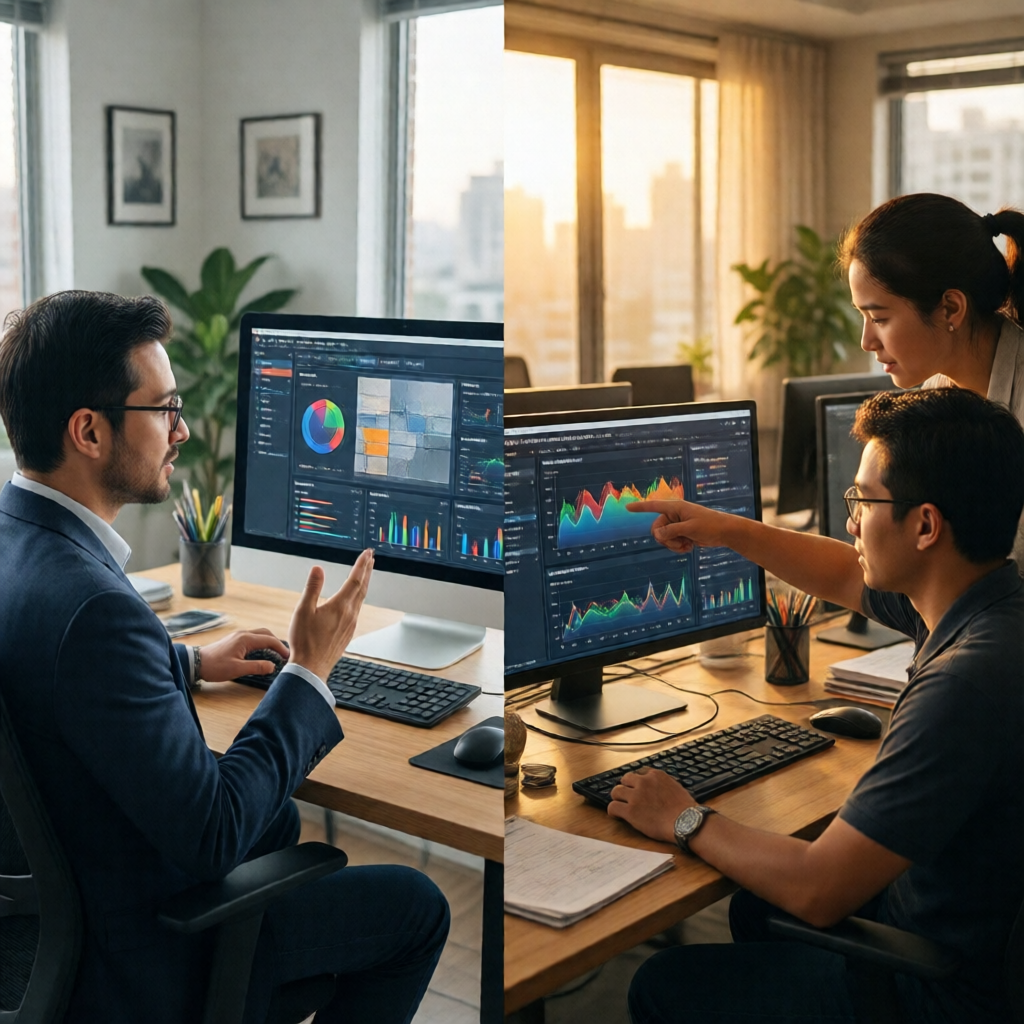 Editorial split-frame — left: a US AI startup CTO at a clean San Francisco home office, gesturing at
"We were spending $28/hr on a US-based annotation vendor for preference ranking. Switching to a dedicated Philippine team at $7/hr cut our training data costs by 75% — and our RLHF benchmark scores actually went up because the team had better English comprehension on edge cases." — composite of US AI startup clients we work with.
The Bottom Line For LLM training data, RLHF preference pairs, and NLP annotation, the Philippines delivers accuracy comparable to Western providers at 50–70% lower cost. Native English fluency, established BPO infrastructure, and a US-compatible work culture make it the strongest cost-to-quality option in offshore annotation — especially for text-heavy AI work where instruction comprehension is the whole ballgame. Comparing regions? Read our Philippines vs Eastern Europe breakdown.
Frequently Asked Questions
How much does it cost to outsource data labeling to the Philippines?
Dedicated data labeling teams in the Philippines typically cost $5–$9 per hour, depending on annotation complexity and team size. That's 40–60% cheaper than equivalent teams in India ($6–$12/hr) or Eastern Europe ($12–$22/hr), while maintaining strong English-language accuracy for NLP and LLM training tasks.
Is the Philippines better than India for AI data labeling?
For text-heavy annotation — RLHF preference ranking, instruction evaluation, NLP classification — the Philippines consistently outperforms India due to higher English fluency benchmarks and US-aligned cultural context. India retains cost and scale advantages for image and computer vision work. The right choice is task-dependent, not a blanket call.
What's the minimum team size to start?
Most providers start at 2–5 dedicated annotators — enough for early-stage ML pipelines. Production-scale labeling (millions of samples/month) typically runs on teams of 10–30. iSuporta structures dedicated annotation teams around your specific workflow and quality requirements from day one.
How do I measure annotation quality from an offshore team?
Use inter-annotator agreement (IAA) — Cohen's kappa for binary and categorical tasks, Krippendorff's alpha for ordinal scales. Set a minimum IAA threshold before production (0.80+ is the standard for NLP classification). Run regular gold-label audits where a small percentage of annotated samples are re-checked against expert labels. Any reputable provider should support this without friction.
Ready to run a test batch? iSuporta's data labeling service is built around dedicated teams with annotation-specific QA built in — not a crowd model.
Get a quote for your annotation project
Tell us your task type, volume, and IAA target. We'll scope a dedicated Philippine team and send you a number within 24 hours.
Bottom Line
Offshore data annotation works — but only when the provider is built for it. The difference between a $0.02-per-label crowd platform and a dedicated Philippine team isn't just cost; it's IAA scores that hold under production load, annotators who understand your schema on day two (not week three), and a QA layer that catches systematic errors before they corrupt your training set.
For US and Australian ML teams, the Philippines hits a rare intersection: near-native English, timezone overlap with evening standups, and annotation costs 60–75% below onshore rates without the quality ceiling that plagues crowd-sourced models.
If your pipeline processes more than 10,000 samples per month, the ROI on a dedicated offshore team is immediate. Start with a 500-sample pilot batch — your IAA numbers will tell you everything you need to know.