A US e-commerce founder once told us he almost signed with a Romanian dev agency for his customer support build-out — purely because the portfolio looked sharp. Three discovery calls later, he realized the team's US business hours overlap was two hours at best, and their English, while technically competent, kept creating friction with American shoppers. He came to the Philippines instead. We see this story constantly.
Here's the short answer on Philippines vs Eastern Europe outsourcing: for the roles US small businesses actually outsource — customer support, virtual assistants, bookkeeping, marketing ops, HR admin — the Philippines wins on cost, English fluency, timezone flexibility, and cultural fit. Eastern Europe is genuinely excellent for specialized software engineering. But that's a different use case entirely.
TL;DR — Quick Verdict
The Core Trade-Off: Cost vs. Technical Depth
Eastern Europe — Poland, Romania, Ukraine — built its outsourcing reputation on engineering, particularly .NET, Java, and embedded systems, at rates that used to undercut Western Europe significantly. Post-2022, that cost gap has narrowed sharply as geopolitical instability triggered talent migration and wage pressure; Eastern European developers now commonly run $35–60/hr, with senior roles touching $80/hr.
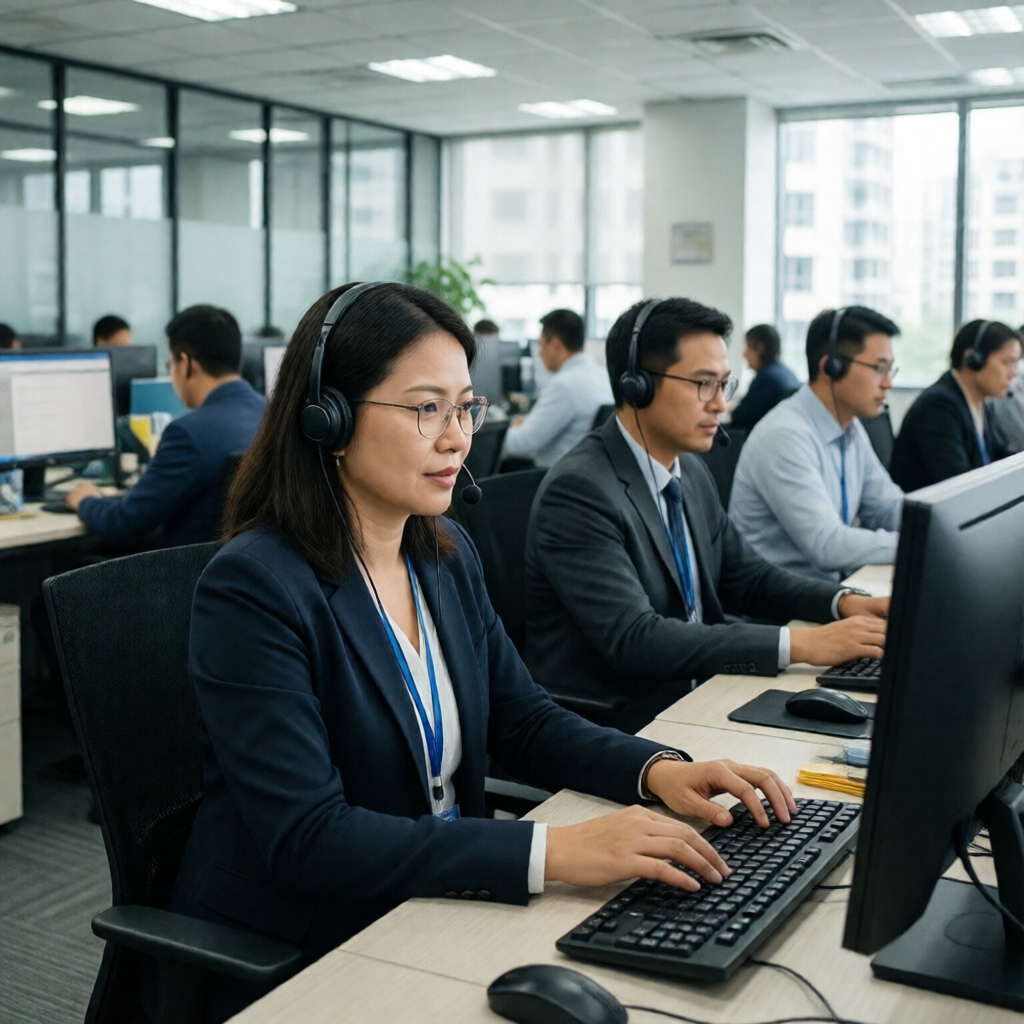 A professional Filipino customer support team in a modern Manila BPO office, multiple agents at work
The Philippines built its reputation differently — on scale, English, and service culture. Over 1.5 million workers are employed in the Philippine BPO sector (IBPAP industry estimates), spanning customer support, finance and accounting, HR, marketing, and back-office operations. Rates typically run $8–18/hr depending on role and seniority — a gap that compounds dramatically at team scale.
| Factor | Philippines | Eastern Europe |
| Avg. hourly rate (BPO roles) | $8–18/hr | $20–45/hr |
| Avg. hourly rate (developers) | $15–30/hr | $35–60/hr |
| English proficiency | Very high — US-accent aligned, #1–2 in Asia globally | Good — technical English strong, service English varies |
| US timezone overlap | Flexible — night shifts widely available, 12–14hr gap manageable | Poor — UTC+1 to +3 means minimal overlap without antisocial hours |
| US cultural alignment | Very high — decades of US BPO history | Moderate — strong work ethic, different service culture |
| BPO infrastructure | World-class — Manila, Cebu, Davao all major hubs | Growing — Warsaw, Bucharest, Kraków strong for tech |
| Best for | Support, VAs, back-office, marketing, finance ops | Niche software engineering, EU-facing tech teams |
Four Reasons the Philippines Wins for US SMB Operations
This isn't a close race for most use cases. Here's why US small businesses consistently land on the Philippines when they look at the full picture.
 Close-up of a Filipino virtual assistant working remotely from a home office setup in Cebu, professi
1. English fluency that actually holds up under pressure. The Philippines ranks top-20 globally on the EF English Proficiency Index and consistently #1–2 in Asia. More importantly, it's US-accented English built from decades of American cultural immersion — television, education, and business. Eastern European English is often technically accurate but carries more accent variance and less exposure to US service idioms. In customer-facing roles, that gap is felt immediately.
2. Timezone flexibility US businesses can actually use. Philippines time (PHT, UTC+8) sits 12–13 hours ahead of US Eastern. That sounds like a problem until you realize the Philippine BPO industry has built an entire workforce infrastructure around night shifts. Filipino workers covering US business hours is the norm, not a special arrangement you have to negotiate. Eastern European workers at UTC+1–3 have a 5–8 hour overlap with the US East Coast at best, which either requires very early European starts or means most of your team's day is invisible to you.
3. US service culture built in, not bolted on. Take a composite client we see regularly — a 12-person US SaaS company outsourcing their first customer support hire. The Filipino candidate they hired understood CSAT scoring, de-escalation language, and American customer expectations without a week of cultural onboarding. That's not a coincidence. It's decades of US-facing BPO work baked into the talent pool. Check out our guide to building a remote customer support team in the Philippines for exactly how this plays out in practice.
4. Rate stability you can budget against. Post-2022 geopolitical disruption has made Eastern European rates less predictable. Talent migration out of Ukraine, wage compression in Poland as the country's cost of living rises — these aren't hypotheticals, they're live market forces. Philippine BPO rates have stayed stable and well-documented. If you want role-by-role benchmarks, the outsourced Philippines salary guide for 2026 breaks down current market rates across every common function.
Key Takeaway For US SMBs outsourcing customer support, VAs, or back-office operations, the Philippines delivers better ROI than Eastern Europe in almost every scenario — on cost, language quality, and cultural alignment.
When Eastern Europe Makes Sense (And When It Doesn't)
Fairness first: Eastern Europe is legitimately strong for niche software engineering. Poland and Romania in particular have produced strong development talent in .NET, Java, and embedded systems. If you're building a complex technical product and need EU-based dev hours, Eastern Europe is a credible choice.
✓ Choose Eastern Europe if…
-
You need specialized European software engineers
-
Your client base is primarily EU-focused
-
You're building a complex technical product with EU data residency requirements
✗ Don't choose Eastern Europe if…
-
You need customer-facing support roles
-
You're cost-conscious and scaling a team
-
You want strong US timezone coverage
-
Cultural alignment with American customers matters
For the typical US SMB — customer support, bookkeeping, marketing assistance, VA, HR admin — Eastern Europe is both overpriced and underfit. You're paying near-Western rates for workers who weren't trained in US service culture and who are sleeping during most of your business day.
"Eastern Europe is excellent. It's just not excellent for what most US small businesses actually need from outsourcing."
The Comparison Series: Philippines vs. Every Major Region
 Split aerial view comparison showing a modern BPO office building in Makati Manila alongside a Warsa
If you're doing serious due diligence, this comparison sits alongside two others worth reading. The Philippines vs India outsourcing comparison covers the accent and attrition differences that matter for long-term support teams. And the Philippines vs Latin America comparison breaks down the timezone advantage argument that LATAM providers often make (it's real, but narrower than advertised).
The pattern holds across all three: the Philippines wins on the combination of cost, English quality, US cultural alignment, and BPO infrastructure depth. That's the decision framework. Use it.
Did You Know? The Philippine BPO sector employs an estimated 1.5+ million workers (IBPAP) and contributes over $32 billion annually to the Philippine economy — making it one of the most mature and well-resourced outsourcing ecosystems in the world. That infrastructure directly benefits the US businesses plugging into it.
2–3× lower rates vs. Eastern Europe for equivalent BPO roles
1.5M+ workers in the Philippine BPO sector (IBPAP estimate)
#1–2 in Asia on EF English Proficiency Index (top 20 globally)
Frequently Asked Questions
Is Eastern Europe cheaper than the Philippines for outsourcing?
No — for most business process roles, Eastern Europe is significantly more expensive. Filipino BPO workers average $8–18/hr; Eastern European professionals in equivalent roles typically cost $20–45/hr, with software engineers reaching $35–60/hr. The cost gap at team scale is substantial.
Do Filipino workers speak better English than Eastern European workers?
For US business contexts, yes. The Philippines ranks top-20 globally and #1–2 in Asia on the EF English Proficiency Index, backed by decades of US-facing BPO experience. Eastern European English is often technically strong but carries more accent variance and less familiarity with US consumer service culture — which matters directly in customer-facing roles.
What roles are better outsourced to Eastern Europe vs. the Philippines?
Eastern Europe excels in niche software engineering — particularly .NET, Java, and embedded systems — and EU-market tech roles. The Philippines is the stronger choice for customer support, virtual assistants, bookkeeping, HR admin, digital marketing, and back-office operations, which represent the core outsourcing use case for most US small businesses.
How does timezone work when outsourcing to the Philippines?
The Philippines is UTC+8, which is 12–13 hours ahead of US Eastern time. The Philippine BPO industry has built an entire workforce infrastructure around US-hours night shifts, making full US-day coverage the norm rather than a special arrangement. See our outsource customer support Philippines guide for how shift structures typically work in practice.
Conclusion Eastern Europe is a great answer to a question most US small businesses aren't asking. For the roles that actually drive SMB outsourcing — customer support, virtual assistants, bookkeeping, marketing, and back-office ops — the Philippines outperforms on every metric that matters: cost, English quality, US cultural fit, and timezone flexibility. The data doesn't change regardless of which region you compare it against.
Ready to build your Philippines team? iSuporta connects US small businesses with pre-vetted Filipino professionals in customer support, virtual assistance, bookkeeping, and back-office ops — at rates that actually make sense for a growing company.